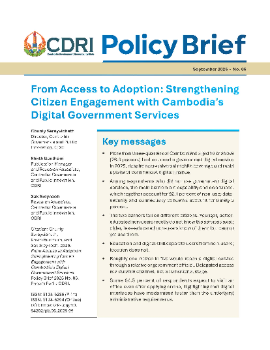
From Access to Adoption: Strengthening Citizen Engagement with Cambodia's Digital Government Services
More than three-quarters of Cambodians aged 16 or above (76.9 percent) had not used a government digital service in 2025, despite near-universal mobile coverage and rapid uptake of commercial digital finance.Among respondents who did not use government digital services, the main barriers are capability and awareness, which together account for...
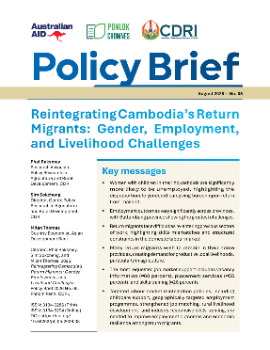
Reintegrating Cambodia’s Return Migrants: Gender, Employment, and Livelihood Challenges
Women with children in their households are significantly more likely to be unemployed, highlighting the disproportionate gendered caregiving burden upon return from Thailand.Employment outcomes vary significantly across provinces, with Battambang province showing the greatest challenges.Return migrants face difficulties...
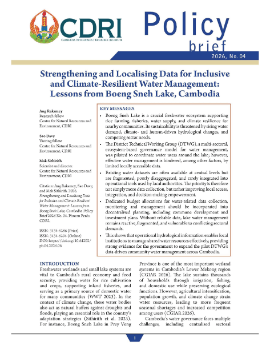
Strengthening and Localising Data for Inclusive and Climate-Resilient Water Management: Lessons from Boeng Sneh Lake, Cambodia
Boeng Sneh Lake is a crucial freshwater ecosystem supporting rice farming, fisheries, water supply, and climate resilience for nearby communities. Its sustainability is threatened by rising water demand, climate- and human-driven hydrological changes, and competing sector needs.The District Technical Working Group (DTWG), a multi-sectoral, eco...
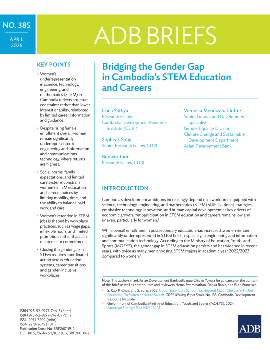
Bridging the Gender Gap in Cambodia’s STEM Education and Careers
Women’s underrepresentation in science, technology, engineering, and mathematics (STEM) in Cambodia reflects structural constraints rather than lower interest or ability, reinforced by limited career information and guidance. Despite rising female enrollment overall, women remain significantly underrepresented in engineering and information and...
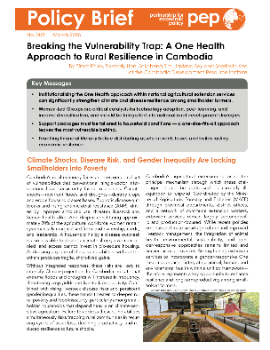
Breaking the Vulnerability Trap: A One Health Approach to Rural Resilience in Cambodia
Institutionalising the One Health approach within national agricultural extension services can significantly strengthen climate and disease resilience among smallholder farmers.Women-Led Groups are critical catalysts for technology adoption, peer learning, and income diversification, and should be integrated into national rural development stra...
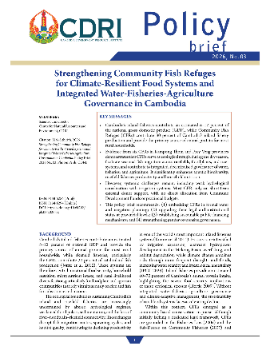
Strengthening Community Fish Refuges for Climate-Resilient Food Systems and Integrated Water-Fisheries-Agriculture Governance in Cambodia
Cambodia’s inland fisheries contribute an estimated 8–12 percent of the national gross domestic product (GDP), while Community Fish Refuges (CFRs) contribute 30 percent of Cambodia’s inland fishery production and provide the primary source of animal protein for most rural households.Evidence from six CFRs in Kampong Thom and Prey Veng province...
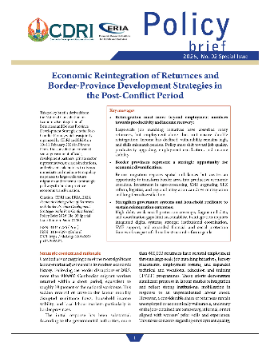
Economic Reintegration of Returnees and Border-Province Development Strategies in the Post-Conflict Period
Reintegration must move beyond employment numbers towards productivity and income recovery:Large-scale job matching initiatives have absorbed many returnees, but employment alone does not ensure durable reintegration. Income has declined, vulnerability remains high, and skills mismatch persists. Policy must shift toward job quality, productivit...
Strengthening Water Governance in Cambodia: Responding to Climate Risks, Altered Hydrology and Institutional Fragmentation
Good water governance requires transparency, accountability, participation, responsiveness, and the rule of law, ensuring water is allocated fairly, used efficiently, and protected for future generations through effective institutions and policies.Growing pressures, including floods, droughts, pollution, competing demands, and climate change,...
Addressing Barriers to Digital Adoption Among Cambodian Micro, Small, and Medium-Sized Enterprises
Gender gaps in digital adoption are mainly linked to structural factors affecting business scale rather than gender-specific technology barriers. When firm size is comparable, men and women owners show similar rates of digital adoption.Barriers to digital adoption for MSMEs include limited information, skill shortages, uncertain economic benefits,...
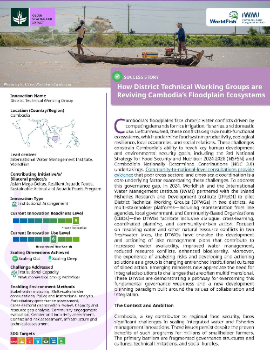
How District Technical Working Groups are Reviving Cambodia’s Floodplain Ecosystems
Cambodia’s floodplains face chronic water conflicts driven by competing demands for rice irrigation, fisheries, and domestic use. Left unresolved, these conflicts degrade multi-functional ecosystems, which undermine food system productivity, ecological resilience, local economies, and social relations. These challenges constrain Cambodia’s ability...