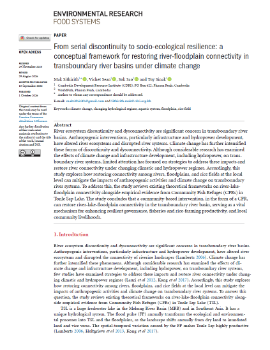
From Serial Discontinuity to Socio-ecological Resilience: A Conceptual Framework for Restoring River-Floodplain Connectivity in Transboundary River Ba...
River ecosystem discontinuity and dysconnectivity are significant concern in transboundary river basins. Anthropogenic interventions, particularly infrastructure and hydropower development, have altered river ecosystems and disrupted river systems. Climate change has further intensified these forms of discontinuity and dysconnectivity. Although con...
The Role of Digital Platforms and Cross-Border Trade in Cambodian Firm Performance
Digital platforms are reshaping how firms access markets, manage transactions and participate in international trade. In Cambodia, where micro and small enterprises dominate, digital platforms offer opportunities to improve productivity, expand market reach and enable cross-border trade. Using firm-level data, this study examines the relationship b...
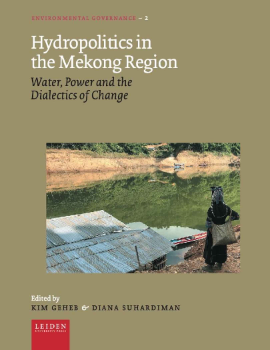
The Political Ecologies of Managing Cambodia’s Tonle Sap Fisheries
Situated in Cambodia, the Tonle Sap Lake (TSL) is the largest freshwater lake in Southeast Asia and the Mekong River Basin. It is a globally important biodiversity hotspot, while also displaying significant economic, livelihood, and food-production values. The lake and its resources are, however, under significant pressure from over-fishing and ups...
Ready to Blossom? African City Skylines, an Empirical Puzzle, and a Proposed Solution
This paper shows that global skyscraper construction both accelerated and globalized after the 2001 attacks on the Twin Towers in New York, into the twenty-first century. Despite being increasingly incorporated into the global economy as a ‘new frontier’ for global investors, Sub Saharan Africa (SSA) did not share in this construction boom. This pa...
Determinants of Informal Borrowing: Evidence from Households in 11 Rural Villages in Cambodia
Informal borrowing remains an important source of financing for rural Cambodian households, exposing them to exploitative interest rates. This study examines the determinants of informal credit reliance using survey data from 1,183 households in 11 villages. We analyze how financial literacy, measured based on understanding of basic financial and e...
The Human Ecology of the Tonle Sap: The Human-Nature Conditions in the Context of Climate Change and Hydropower Development
Tonle Sap Lake (TSL) is the largest freshwater lake in Southeast Asia. The flood pulse of TSL, characterized by the flow and volume of water from the Mekong River, shapes the inundation and the productivity of fishery and natural resources; and the human ecological system of (1) water-based, (2) land-based, (3) water-land-based communities. Climate...
Unfolding India’s Development Partnership In The Mekong Subregion: A Comprehensive Overview
The Mekong subregion has received considerable attention from major powers due to its strategic location at the intersection of major Asian economies, wealth of resources, and increasing geopolitical significance. India was the first major power that initiated multilateral cooperation with this region in the early 2000s. However, India’s developmen...
Dynamic Multi-Factor Flood Risk Assessment in Peri-Urban Areas: Integrating Migration, Exposure, and Community-Level Vulnerability and Capacity
Rapid peri-urban expansion has intensified flood risk in Southeast Asian cities through wetland loss, rural–urban migration, and delayed infrastructure development. This study examines the spatial and temporal dimensions of flood risk in Phnom Penh, Cambodia using a multi-factor framework based on hazard, exposure, vulnerability, and coping capacit...
Understanding Academic Achievement Gap in Cambodia: Why Boys Lag Behind in Upper Secondary Schools?
The global emphasis on addressing gender disparities in education has highlighted the importance of equitable academic achievement. In Cambodia, where men traditionally dominated the society, a notable shift has been observed: female students have surpassed their male counterparts academic performance in recent years. This reversal has sparked sign...
Strengthening Systems for Inclusive Climate Resilient Water, Sanitation and Hygiene Services in Cambodia
Inadequate governance and climate change exacerbate vulnerabilities in Cambodia's water system. More than 25% of the rural population relies on untreated water sources, while only 37% have access to safely managed sanitation. This study employed a participatory action research approach to examine the effectiveness of national Climate-Resilient Wate...