
Abstract/Summary
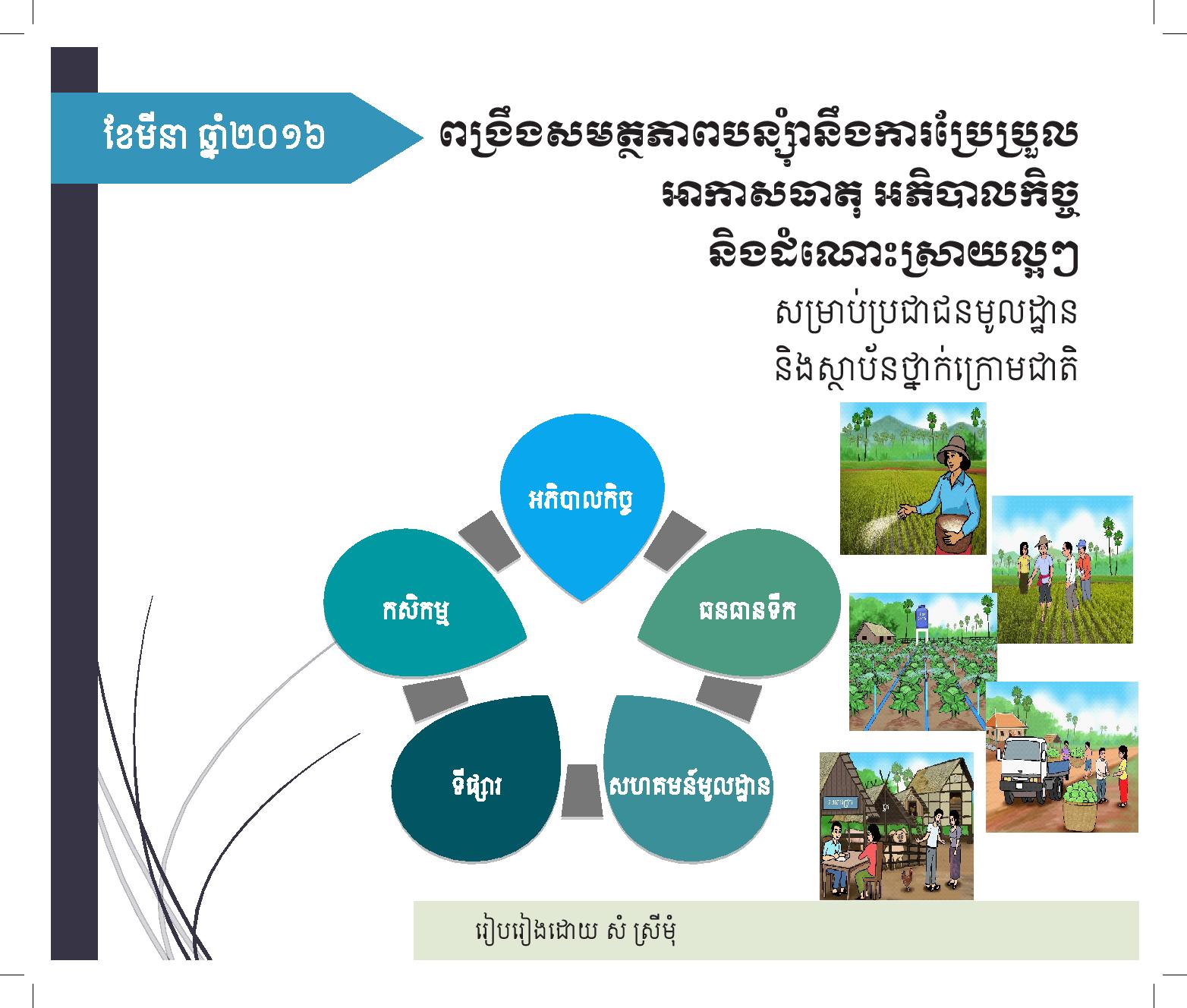
This handbook is designed for small farmers and local smallholders. Using understandable terms and clear, attractive pictures, it sets out some of the best farming practices for enhancing adaptive capacity and resilience to climate change. It explains:
- How climate change and human activities affect water resources and local livelihoods;
- What can be done to strengthen water governance for more effective water use and management in response to climate change;
- Easily applicable field and water management practices for adaptation;
- How to market small farm products;
- What local communities can do to improve their adaptive capacity.
In view of its popularity among local people, this illustrated handbook is clearly very useful.
Related Publications
From Serial Discontinuity to Socio-ecological Resilience: A Conceptual...
08-Oct-2026
River ecosystem discontinuity and dysconnectivity are significant concern in transboundary river basins. Anthropogenic i...
The Political Ecologies of Managing Cambodia’s Tonle Sap Fisheries
11-Aug-2026
Situated in Cambodia, the Tonle Sap Lake (TSL) is the largest freshwater lake in Southeast Asia and the Mekong River Bas...
Hydrological Dynamics and Implications for Integrated Water Resources...
04-Aug-2026
Boeng Sneh Lake (BSL), a 3,924-hectare freshwater wetland in Cambodia’s Mekong Delta, is a critical water resource tha...